The Beginning
After the COVID 19 outbreak, also known as the coronavirus, I have been quarantined to my home by my parents. After being quarantined, I decided to build an aquaponics system. I researched the different types of aquaponics systems and found there were three main ones: Deep-Water, Media-Filled, and NFT. All of these systems usually have a container for the fish and a container with the plants, sometimes with a waste container for solid waste.
Deep-Water
Deep-Water is almost exactly as it sounds, where there is a container filled with water with floating rafts on top of the water. The rafts usually have holes that can hold plants. This is the only one of the three types that can reasonably be an enclosed system, where the plants feed the fish and the fish feed the plants. The fish will eat the plant roots and will produce waste that the plants can use. The water in this system circulates around the container or is pumped to another container where the solid waste can be separated from the nutrients. After being pumped into another container, the water flows back into the first container.
Media-Filled
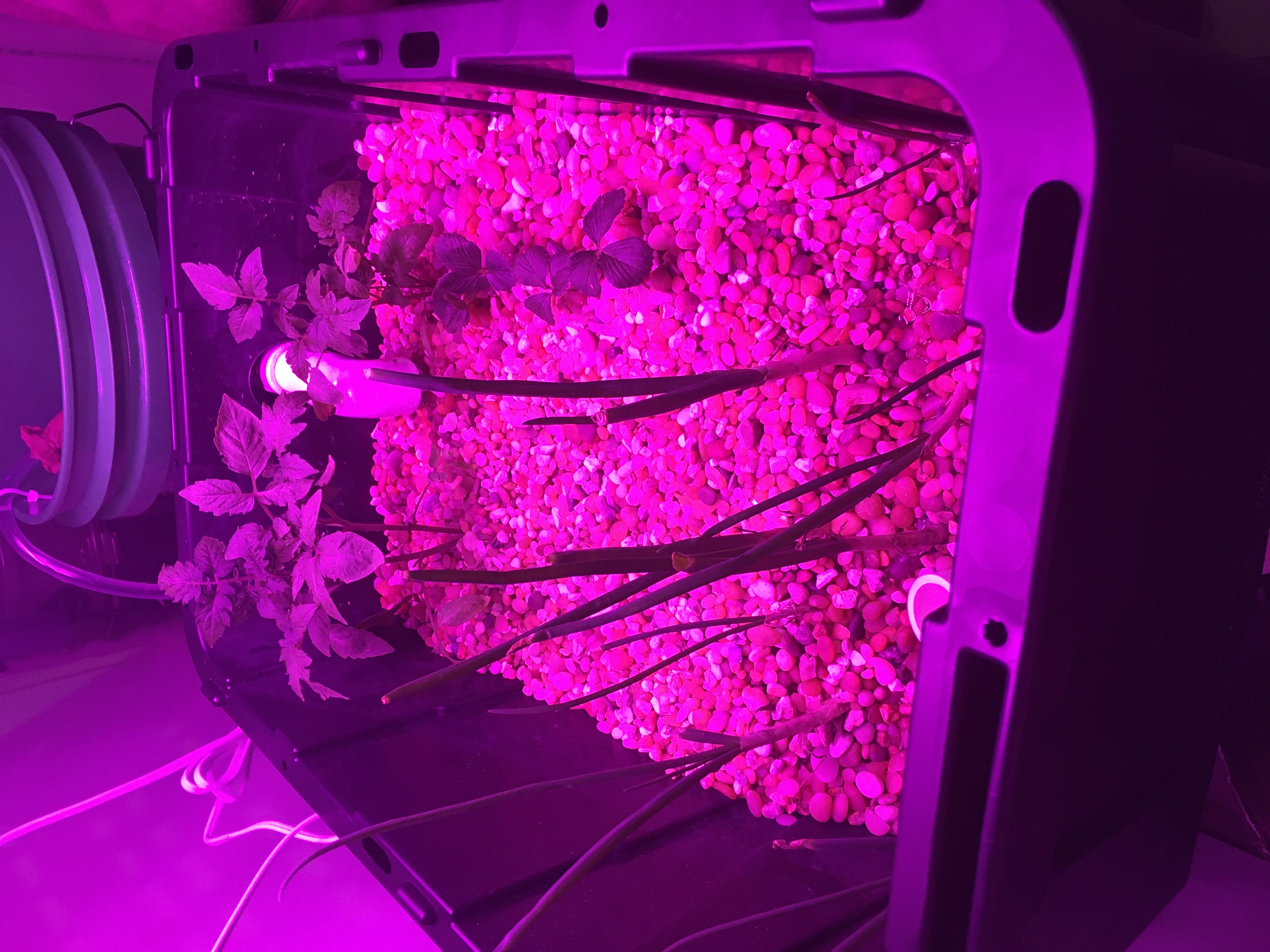
Media-Filled is a container filled with a medium sized media, usually clay pellets for aquaponics. The plants go into the media and the media provides a “platform” for the plants to stay. I say “platform” because the clay pellets float in water but they don’t really make a platform. The water in this system is pumped either into another container for cleaning or into the media container. The water then flows from the container back into the fish container, where it is cycled again. Those two are the most similar with the odd one out being NFT.
NFT
NFT means Nutrient Film Technique. This is where you have tubes for the water to go through and the tubes have holes for plants to reside. The holes require some sort of netting to hold the plant in place, like a netted pot or some cheesecloth. The film means the water flow is so small it seems to be a film on the bottom of the tube. The water here is propelled by gravity through all the tubes until it flows back into the fish container.
What I Chose
I picked the Media-Filled system because it seems to be able to grow a bigger variety of plants than the Deep-Water or NFT systems can. The Deep-Water requires the plants to be light enough so they don’t sink the rafts, while the NFT requires that the plants grow straight up because plants that like to spread out will spread out over the sides of the tubing and into the water or into a place where they don’t get a lot of light. Media-Filled can have any type of plant that likes water because it can have heavy plants, like tomato plants that bear fruit that can be massive, and spreading plants, like strawberries that like to spread out to surrounding places. I wanted to grow tomatoes, peppers, onions, and strawberries, most of which either cannot be in the Deep-Water or NFT systems, so I chose Media-Filled.
Materials
I had to get many different materials, ranging from the fish tank (a barrel in my case) to the shelving. The system itself needed an air pump, air stones, air tubing, clay pellets, a fish tank, a five gallon waste bucket, several grow lights, a media bed, shelving, a water heater, a water pump, and water pump tubing.

Problems
There were a couple of problems that I ran into while building my system. The first one was that no store near me had rain barrels with removable tops. While this seemed like an issue in the beginning, I realized that I could just cut through the side of the barrel to remove the top. Another problem I ran into was that the barrel started leaking from around the spigot. This problem came about after I had mostly set up my system. I used a lot of different ways to stop the leak, including putting construction caulk around the spigot where it was leaking. This would temporarily stop the leaking but it eventually continued because the caulk didn’t have enough time to dry properly and the water went straight through it. After this, I saw no other way to stop the leaking than draining all the water out of my system and letting the spigot dry overnight. At this point, I already had plants in the system so I had to leave water in the container with the plants so the plants didn’t get all sad and droopy. The next day I took the spigot from the rain barrel out, cleaned the construction caulk off of it, and put plumbers tape around the grooves in the spigot. I put the spigot in and put some more construction caulk around it just to make sure the leaking stopped. Now I just had to wait for it to dry. Being the impatient person I am, I looked up some ways to dry caulk quickly and came across the hairdryer method. The hairdryer method is where you get a hairdryer and you blow hot air on the thing you want to dry for a while. I tried this and it dried in about thirty minutes compared to the several hours it said it was supposed to dry by. I tested out my system again, and it didn’t have any more leaks. After testing the spigot, I needed to heat up the water, so I went to a bathtub and filled many pots and bowls with warm water and poured them into my system. To dechlorinate the water, I used some fish-grade tap-water dechlorinator and went and got some fish. The fish are doing well as of day four of the system and day one of the fish being in the system.